
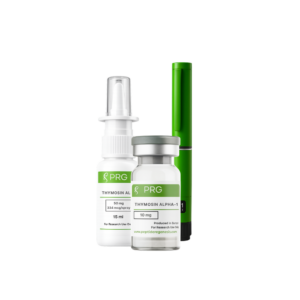
What Is Thymosin Alpha 1?
Thymosin alpha 1 is a 28-amino-acid peptide originally isolated from the thymus gland, where it plays a central role in regulating immune function. Sometimes written as thymosin alpha-1 or alpha 1 thymosin, it’s one of the most extensively studied immune-modulating peptides in the scientific literature, with a research and clinical history stretching back to the 1970s.
Its synthetic form, thymalfasin (brand name Zadaxin), is an approved medicine in more than 35 countries and carries FDA orphan-drug status in the US for several specific indications. That puts thymosin alpha 1 in a different category from many newer research peptides: this is a compound with a genuine, if narrow, clinical track record, not purely a laboratory curiosity.
Structure and Biochemistry of the Thymosin Alpha 1 Peptide
Structurally, the thymosin alpha 1 peptide is a short, positively charged, largely unstructured chain that takes on a distorted helical configuration under certain solvent conditions, with a stable alpha-helix region and two turns near its N-terminus. It was first identified within “thymosin fraction 5,” a mixture isolated from calf thymus tissue.
Today it’s produced almost exclusively through solid-phase peptide synthesis for clinical and research use, since direct extraction from animal thymus tissue yields only trace amounts. Genetic engineering approaches, using bacteria, yeast or even transgenic plants, have been explored as alternatives but haven’t yet reached clinical production.
How Thymosin Alpha 1 Works in the Immune System
The core of thymosin alpha 1’s biological activity lies in its interaction with the immune system’s signalling machinery. It acts on Toll-like receptors (TLR-9 and TLR-2) in dendritic and myeloid cells, which stimulates the adaptive immune response and helps coordinate the body’s defence against viral, bacterial and fungal threats.
Documented immune effects include:
- Promoting maturation and differentiation of T cells, including CD4+ and CD8+ populations
- Activating natural killer cells
- Increasing production of key cytokines, including interleukin-2, interleukin-10, interleukin-12, and interferons alpha and gamma
- Enhancing antigen presentation by macrophages and dendritic cells
- Reducing pro-inflammatory markers like IL-1β and TNF-α in certain contexts
Alongside its immune-modulating role, research has also documented antioxidant effects, including increased activity of catalase, superoxide dismutase and glutathione peroxidase, which appear to reduce oxidative damage in some tissue models.
Clinical and Research Applications
Thymalfasin’s clinical history spans several distinct areas, though it’s worth noting many of these uses have evolved or been superseded as newer treatments emerged.
Chronic viral hepatitis. Thymosin alpha 1 was studied extensively for hepatitis B and C, both alone and combined with interferon-alpha, showing meaningful virological response rates in some trials. However, this use has largely been replaced by direct-acting antiviral drugs in modern practice.
Immune deficiency and vaccine response. It has been investigated as an enhancer of vaccine immunogenicity, particularly in elderly and immunocompromised populations receiving influenza vaccination, and as a treatment to help restore T-cell function in various immunodeficiency states, including DiGeorge syndrome.
Oncology support. Clinical studies have explored thymosin alpha 1 as an adjunct in cancers including hepatocellular carcinoma, non-small cell lung cancer, melanoma and renal cell carcinoma, largely aimed at reducing chemotherapy-induced immunosuppression and toxicity rather than as a standalone treatment.
Sepsis. Trials in patients with severe sepsis have reported reduced mortality associated with thymosin alpha 1 therapy, attributed to its role in modulating immune dysfunction linked to multi-organ failure.
COVID-19 research interest. During 2020, thymosin alpha 1 drew renewed research attention for its potential to address T-cell lymphopenia in severely ill COVID-19 patients, and China’s National Health Commission listed it as an alternative treatment option for patients with lymphocytopenia. Multiple clinical trials were registered to investigate this further. This remains an area where the evidence base is still developing, and findings from that period shouldn’t be treated as settled clinical guidance today.
Autoimmune and inflammatory conditions. More recent interest has extended to conditions like psoriatic arthritis, where lower serum thymosin alpha 1 levels have been observed, and exploratory work in multiple sclerosis, rheumatoid arthritis and ulcerative colitis.
Safety Profile
In the clinical literature, thymalfasin is generally described as well tolerated. The most commonly reported adverse effects are mild, local irritation or discomfort at the injection site. When combined with interferon-alpha therapies, additional effects such as fever, fatigue and muscle aches have been reported more frequently, though these are largely attributable to the interferon component. It’s contraindicated in patients with known hypersensitivity to the peptide and requires caution in immunosuppressed populations, such as organ transplant recipients.
This safety profile applies specifically to the clinical, prescribed use of thymalfasin under medical supervision, not to unregulated or self-administered sourcing.
Storage Considerations
In laboratory and clinical settings, thymosin alpha 1 is generally handled as follows:
- Store at -20°C for standard use
- For long-term storage, keep below -180°C in desiccated form
- Lyophilised material can remain stable for a limited period at room temperature, but cold storage is standard practice
- Once reconstituted, use within the timeframe specified by the manufacturer, and avoid repeated freeze-thaw cycles
- For extended storage post-reconstitution, a carrier protein (such as human or bovine serum albumin) is sometimes used to preserve stability
Anyone handling this compound in a laboratory setting should follow their institution’s validated protocols rather than generic guidance.
Thymosin Alpha 1 vs Thymosin Beta 4
It’s worth distinguishing thymosin alpha 1 from thymosin beta 4, since both originate from thymus tissue but have entirely different structures and functions. Thymosin alpha 1 is primarily an immune-system regulator, most relevant in infectious disease, oncology and immunodeficiency research. Thymosin beta 4 belongs to a different protein family involved in regulating actin, the cytoskeletal protein, and has been studied more in contexts like tissue repair and wound healing. They shouldn’t be treated as interchangeable in research design or sourcing.
Frequently Asked Questions
Is thymosin alpha 1 an approved medicine?
Its synthetic form, thymalfasin, is approved in more than 35 countries and holds US FDA orphan-drug status for specific conditions. Approval and availability vary significantly by country, so check current regulatory status wherever you are.
What’s the difference between thymosin alpha 1 and thymalfasin?
Thymalfasin is the synthetic, clinically manufactured version of naturally occurring thymosin alpha 1. In practice, the terms are often used interchangeably in the literature.
Is thymosin alpha 1 still used for hepatitis?
Its use for hepatitis B and C has largely been superseded by modern direct-acting antiviral therapies, which are more effective and better tolerated.
Is thymosin alpha 1 the same as thymosin beta 4?
No. They’re structurally and functionally distinct peptides from the same gland, with different research applications.
Final Thoughts
Thymosin alpha 1 stands out in the peptide research space for having decades of published clinical data and genuine regulatory approval history behind it, alongside continued research interest in immunology, oncology and infectious disease. That track record is exactly why claims about it should be sourced carefully: this is a compound where the evidence base is real, specific and worth representing accurately rather than stretched into generic wellness language.
Reviews
There are no reviews yet.