Retatrutide (LY3437943): The Complete Guide to the Triple-Agonist Weight Loss Peptide
The landscape of metabolic healthcare is undergoing a rapid evolution. While dual-agonist medications like tirzepatide set new standards for medical weight management, retatrutide—frequently referred to in scientific literature as the “triple-G” or “Godzilla” peptide—represents the next generation of incretin-based therapeutics.
This comprehensive guide breaks down the science behind the retatrutide peptide, its mechanism of action, clinical trial findings, dosing protocol, expected costs, and current regulatory status in the UK and worldwide.
What is Retatrutide Peptide?
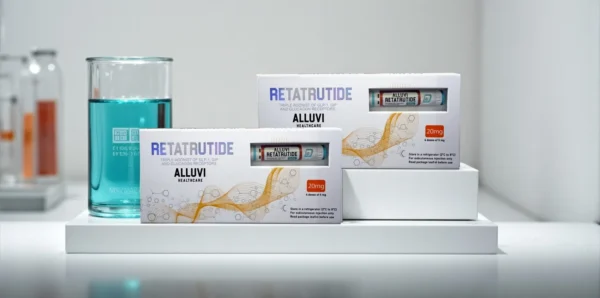
Retatrutide (development code LY3437943) is an experimental multi-hormone receptor agonist developed by Eli Lilly. Classified structurally as a reta peptide, it is designed to simultaneously activate three key metabolic receptors:
- GLP-1 (Glucagon-Like Peptide-1)
- GIP (Glucose-Dependent Insulinotropic Polypeptide)
- Glucagon
Earlier generations of weight loss treatments target fewer pathways. Semaglutide acts solely as a GLP-1 receptor agonist, while tirzepatide acts as a dual GLP-1/GIP agonist. By incorporating glucagon receptor activity, retatrutide directly stimulates resting energy expenditure and accelerates fat oxidation in the liver alongside appetite suppression.
Retatrutide vs. Existing GLP-1 and Dual-Agonist Medications
Understanding how the retatrutide peptide differs from existing options helps highlight why it has attracted significant attention in endocrinology:
| Feature / Metric | Semaglutide (Wegovy) | Tirzepatide (Mounjaro) | Retatrutide (LY3437943) |
| Receptors Targeted | GLP-1 | GLP-1 + GIP | GLP-1 + GIP + Glucagon |
| Max Average Weight Loss | ~15% – 20.9% | ~20.9% – 22.5% | Up to 24.2% (48 wks) / 28.7% (68 wks) |
| Administration | Subcutaneous Injection | Subcutaneous Injection | Subcutaneous Injection |
| Dosing Frequency | Once Weekly | Once Weekly | Once Weekly |
| Primary Secondary Effect | Glycemic control | Glycemic control & lipogenesis | Elevated basal caloric burn & liver fat reduction |
| UK / Global Status | MHRA Approved | MHRA Approved | Phase 3 Clinical Trials |
How the Triple-Action Science Works
Retatrutide’s unique clinical profile stems from its multi-receptor targeting:
- GLP-1 Activation: Appetite Suppression & Satiety
GLP-1 receptor activation slows gastric motility (the rate at which the stomach empties) and acts on hypothalamic satiety centers in the brain. This minimizes hunger cues and prolongs the sensation of fullness after meals.
- GIP Activation: Metabolic Optimization & Gl-Tolerability
GIP receptor stimulation works synergistically with GLP-1 to enhance glucose-dependent insulin secretion while reducing common gastrointestinal side effects typically seen with single-agent GLP-1 therapies.
- Glucagon Activation: Direct Thermogenesis & Hepatic Fat Clearance
Unlike GLP-1 or GIP, glucagon receptor activation directly stimulates energy expenditure. It boosts the resting metabolic rate and promotes hepatic fat oxidation—making it particularly effective for individuals with non-alcoholic fatty liver disease (NAFLD) or metabolic dysfunction.
Clinical Trial Results: Phase 2 and Phase 3 Data
Clinical findings published in The New England Journal of Medicine (NEJM) and reported across Eli Lilly’s TRIUMPH Phase 3 trial program demonstrate significant efficacy:
- 24 Weeks: Participants taking the maximum 12 mg dose achieved an average weight loss of 17.5%.
- 48 Weeks: Mean body weight reduction reached 24.2% (approximately 58 lbs / 26.2 kg) at the highest dose.
- Extended Duration (68–80 Weeks): Topline data indicates average weight reduction approaching 28.7% in high-dose cohorts.
- High Responder Rate: 100% of trial participants on the 8 mg and 12 mg weekly protocols lost at least 5% of their starting weight.
- Metabolic Health: Over 80% of study participants with elevated liver fat achieved complete normalization of hepatic fat levels by week 48.
Retatrutide Dosage Schedule and Administration
In ongoing clinical studies, retatrutide is administered as a once-weekly subcutaneous injection using a multi-dose retatrutide pen or auto-injector system.
To allow the gastrointestinal tract to adapt and to minimize adverse events, a monthly dose escalation protocol is utilized:
Potential Side Effects
Adverse reactions reported in clinical trials are predominantly mild-to-moderate and gastrointestinal, primarily occurring during escalation steps:
- Nausea and transient indigestion
- Diarrhea or constipation
- Mild elevation in resting heart rate (attributed to glucagon receptor activity)
- Temporary decrease in energy during early caloric deficit
Retatrutide Availability, Regulatory Timeline & Retatrutide Price
Is Retatrutide Approved in the UK or US?
No. Retatrutide is an investigational drug. It is not currently approved by the Medicines and Healthcare products Regulatory Agency (MHRA) in the UK, the US FDA, or the European Medicines Agency (EMA).
Eli Lilly completed key Phase 3 TRIUMPH trials and announced plans to submit a formal Biologics License Application (BLA) in early 2027. Subject to regulatory review periods, general commercial availability through licensed prescribers is anticipated for late 2027 or early 2028.
Expected Retatrutide Price and Cost Structure
Because the drug remains in clinical development, an official retail retatrutide price has not been established by Eli Lilly. Based on current market pricing for dual-agonist treatments (such as Mounjaro) and single-agonists (such as Wegovy), industry analysts estimate commercial retatrutide pens will cost between £180 and £280 per month in private UK digital clinics upon release.
Regulatory Warning on Unlicensed “Reta Peptides”
Certain third-party vendor sites market unapproved chemical powders, vials, or unregulated retatrutide pens under the guise of “research compounds.” Health authorities strongly advise against purchasing or injecting these unregulated products. Unlicensed preparations carry significant risks of microbial contamination, imprecise concentration, heavy metal exposure, and severe adverse health outcomes.
Summary: What Lies Ahead for Incretin Therapies
The retatrutide peptide represents a major shift in non-surgical weight management. By uniting GLP-1, GIP, and glucagon receptor stimulation into a single weekly injection, it offers unprecedented weight loss efficacy and metabolic benefits in trial settings.
While patients await its official licensing and commercial availability, MHRA-approved GLP-1 and dual-agonist options remain the gold standard for medically supervised weight loss today.
Reviews
There are no reviews yet.