

Laboratory investigators operating across research facilities in Great Britain maintain strict standards when preparing synthetic peptides for analytical evaluation. Body Protection Compound 157 represents a fifteen-amino-acid chain originating from partial sequence isolation of human gastric juice proteins. Experimental protocols involving this sequence require exact volumetric calculations to maintain consistent concentrations across cellular assays, tissue culture models, and preclinical trials.
Achieving absolute mathematical precision demands reliable measuring frameworks. Utilizing a systematic bpc-157 dosage calculator protocol eliminates human error when converting milligram powder masses into specific liquid concentrations. Scientific teams procuring reference materials from a certified UK supplier depend on exact analytical readouts, batch documentation, and cold-chain integrity to yield valid, reproducible quantitative data.
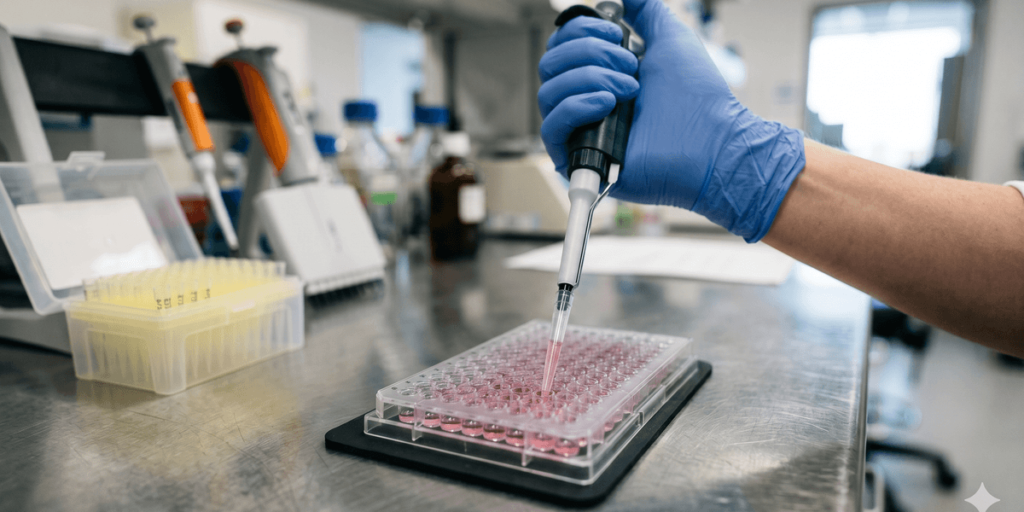
Molecular Mechanics and Biological Fundamentals of Body Protection Compound 157
The chemical sequence of BPC-157 comprises the specific linear arrangement Gly-Glu-Pro-Pro-Pro-Gly-Lys-Pro-Ala-Asp-Asp-Ala-Gly-Leu-Val. Solid-phase peptide synthesis strings these amino acid residues together in exact order, yielding a molecular weight of 1419.5 Daltons. Biological studies inspect this specific pentadecapeptide structure to evaluate focal adhesion kinase activation, nitric oxide production, and VEGFR2 receptor expression in vitro.
Experimental models monitor cellular responses when exposing endothelial cultures to specific concentration gradients. Precise mathematical scaling ensures target tissues receive uniform exposure levels throughout observation windows. When research parameters require comparative analyses between gastrointestinal models and metabolic target pathways, research teams often evaluate parallel sequences listed in specialized catalogs such as retatrutide peptide uk offerings.
Maintaining structural integrity requires understanding how environment alters peptide bonds. Exposure to excessive thermal energy or improper enzymatic conditions breaks down sequence links. Consequently, establishing precise initial liquid volumes prevents physical stress during mixing steps and preserves target structural characteristics.
Standardized Mathematical Protocols for In-Vitro Volume Calculations
Calculating accurate liquid concentrations requires converting dry lyophilised mass into volumetric units. Standard research vials contain dry peptide powder ranging from 2 milligrams to 10 milligrams per unit. Adding bacteriostatic water or sterile saline creates a workable liquid concentration measured in micrograms per graduation mark on laboratory syringes.
To determine unit concentration, technicians apply basic algebraic ratios:
- Total peptide mass in milligrams divided by total diluent volume in millilitres establishes the master baseline ratio
- Multiplying the baseline ratio by syringe scale divisions converts total volume into microgram values per unit mark
- Adjusting diluent volume alters microgram density, allowing customized concentration settings for specific test wells
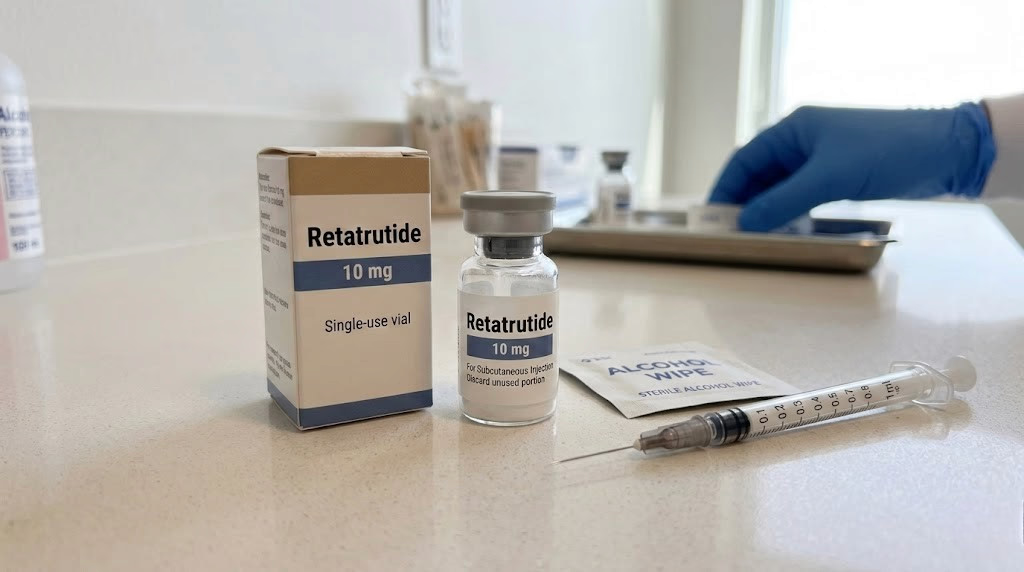
Executing these calculations manually introduces potential arithmetic errors, particularly when managing multi-vial trial runs. A verified digital calculation framework standardizes these mathematical conversions instantly, ensuring identical microgram exposure across every experimental sample group.
Comparing Reconstitution Variables and Solid Oral Matrix Formulations
While liquid reconstitution remains the standard method for parenteral culture experiments, alternative delivery matrixes provide distinct research advantages. Solid oral formats like bpc-157 capsules eliminate reconstitution steps entirely, offering pre-measured microgram quantities encapsulated within protective chemical shells.
Formulators often combine the core pentadecapeptide with organic arginine salts to form stable molecular complexes. This specific chemical arrangement resists degradation in acidic pH environments, making oral capsule formats ideal for targeted gastrointestinal mucosal assays. Researchers evaluating direct tissue interactions compare these stable oral units against liquid formulations to measure regional absorption kinetics without compounding steps.
Facilities seeking complete product options across varied research formats can review available inventory in our comprehensive products catalog, matching specific physical compound formats to precise experimental objectives.
Analytical Verification Protocols: HPLC Purity and Mass Spectrometry
Scientific validity rests entirely upon the purity of research reagents. Standard commercial grade compounds containing unverified impurities yield skewed experimental results and non-reproducible trial outcomes. Sourcing verified material requires reviewing independent laboratory testing reports for every individual production lot.
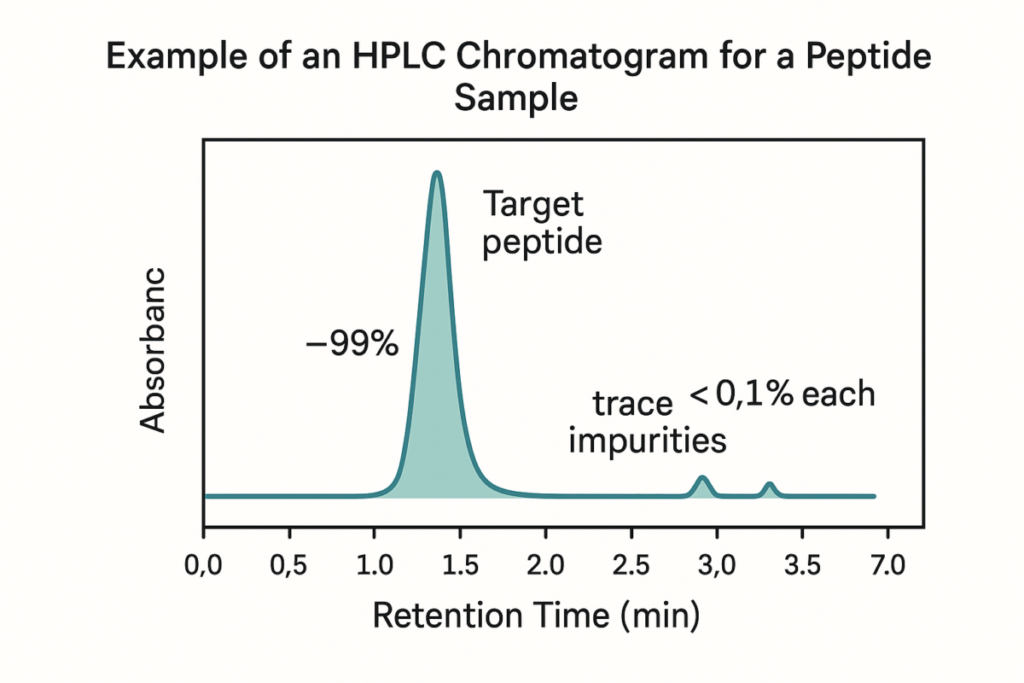
High-Performance Liquid Chromatography serves as the premier analytical method for evaluating chemical purity. Reversed-phase HPLC separates target peptide molecules from synthesis residues, optical isomers, or sequence fragments. A clear, sharp chromatography peak confirms compound purity levels exceeding 99% purity thresholds.
Mass spectrometry complements liquid chromatography by providing exact molecular weight verification. Liquid Chromatography-Mass Spectrometry analysis confirms that the observed molecular mass matches the theoretical value of 1419.5 Daltons exactly. Additionally, Limulus Amebocyte Lysate assays measure bacterial endotoxins, guaranteeing that total endotoxin levels remain far below critical safety boundaries for delicate cell cultures.
Establishing Rigorous Laboratory Controls and Storage Guidelines
Maintaining chemical stability over extended observation periods requires strict adherence to environmental controls. Unreconstituted lyophilised powders remain stable at room temperature for brief periods during transport, but long-term storage demands dedicated refrigeration between 2 and 8 degrees Celsius or freezing at minus 20 degrees Celsius.
Once reconstituted with bacteriostatic water, liquid peptide solutions become significantly more delicate. Researchers must store reconstituted vials in refrigerated conditions, protecting the liquid from direct ultraviolet light exposure and severe agitation. Rapid physical shaking or frequent freeze-thaw cycles breaks fragile peptide chains, reducing effective active compound concentration within the vial.
Consulting verified scientific literature indexed in open research resources like the NCBI PubMed database provides additional guidance regarding chemical stability profiles under varied laboratory temperatures and exposure windows.
Verified Sourcing and Batch Assurance Standards in Great Britain
Procuring research compounds in the United Kingdom requires selecting suppliers that maintain total supply chain transparency. Evolve Labs UK operates with rigorous batch traceability protocols, providing lot-specific Certificates of Analysis for every distributed batch. Every product batch number links directly to independent analytical testing documents generated by qualified testing facilities.
Temperature-controlled cold-chain shipping standards protect temperature-sensitive compounds throughout transit. Specialized insulated packaging prevents thermal degradation, ensuring materials arrive at research destination facilities in prime physical condition. Fast UK delivery options minimize project delays, allowing lab personnel to maintain consistent trial schedules.
All peptide products distributed through authorized channels are strictly designated for laboratory research use only. These compounds represent specialized chemical reagents intended exclusively for in-vitro experiments, analytical testing, and preclinical trial designs. Regulatory entities including the European Medicines Agency define clear operational boundaries separating experimental research chemicals from approved clinical formulations.
Institutional researchers requiring detailed technical documentation, bulk ordering logistics, or batch verification records can communicate directly with technical support specialists via our Contact Us page. Working alongside verified distributors guarantees that laboratory investigations proceed with absolute confidence regarding chemical purity and mathematical precision.