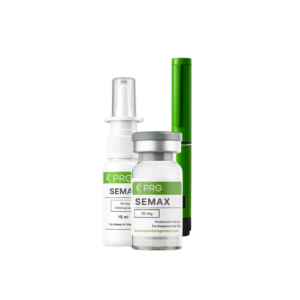
Semax Peptide: Why Researchers Keep Searching for It
Interest in the semax peptide has grown sharply among neuroscience and cell-signalling labs. Search results, though, are split between clinic pages making treatment claims, regulatory news and thin product listings. This guide keeps to what a laboratory buyer actually needs: what the molecule is, what the literature investigates, the current regulatory picture, and how to judge supplier quality.
Research use only. Semax is sold for laboratory research. It is not a medicine or supplement in the UK, and it is not for human or veterinary use.
What Is Semax Peptide?
If you are asking what is semax peptide, the short answer is that it is a synthetic heptapeptide (seven amino acids) developed in Russia from a fragment of adrenocorticotropic hormone (ACTH). It combines the ACTH(4-7) sequence with a Pro-Gly-Pro tail, a modification generally understood to slow enzymatic breakdown.
Key identifiers, as listed on supplier product pages:
- Sequence: Met-Glu-His-Phe-Pro-Gly-Pro (MEHFPGP)
- Molecular formula: C37H51N9O10S
- Molecular weight: about 813.9 g/mol
- Typical form: lyophilised powder
Semax is approved as a medicine in Russia, but it has no approved medicinal status in the UK or EU. That difference is why UK suppliers must keep to research-only wording.
Semax Peptide Benefits: What the Research Actually Examines
The phrase semax peptide benefits appears on many clinic pages promising sharper focus, better memory or treatment of attention problems. Those are human-use claims, and they are not appropriate for a research supplier. They also outrun the evidence: regulators reviewing Semax in 2026 cited limited human data and incomplete characterisation.
What the research literature does investigate, largely in cell and animal models, includes:
- Effects on neurotrophic signalling, including BDNF expression
- Interaction with dopaminergic and serotonergic pathways
- Neuroprotection models involving ischaemia or oxidative stress
- Neuroendocrine and stress-response signalling
- Gene-expression changes in neural tissue
Describing it this way keeps your page accurate, and it keeps you on the right side of UK rules on unlicensed medicines advertising.
Regulatory Snapshot (Check Before Publishing)
A BSR briefing from July 2026 reports that the US FDA’s Pharmacy Compounding Advisory Committee scheduled a review of Semax for the 503A compounding list, with FDA staff recommending against listing. The briefing also states that Semax has no approved medicinal product status in Great Britain or the EU. I could not confirm the outcome of the vote, so verify the latest position before you publish any regulatory statement. Cite the primary FDA and MHRA sources where you can.
How to Check Semax Quality Before You Buy
Semax has no pharmacopoeial monograph, so no standard exists to benchmark purity claims against. That puts the burden on documentation:
- Batch-specific COA with a lot number matching your vial
- HPLC purity result, with method stated (98% or higher is common)
- Mass spectrometry confirming a mass consistent with about 813.9 g/mol
- Chemical form: free base or acetate, since salt forms change mass per vial
- Lot-to-lot consistency: ask for data across sequential batches
- Research-use labelling and no dosing or health claims anywhere on the page
Price and Format: What UK Listings Show
At the time of review, UK research listings ranged from about £19.99 for a 5mg vial (PepGevity) to £24.99 or more (BSR). Compare cost per milligram, and check whether documentation and tracked delivery are included. A lower price with no COA is not a saving.
[Insert your own vial sizes and prices here.]
Storage and Handling
- Store lyophilised vials as directed on the COA or SDS, typically cold, dry and protected from light
- Follow validated laboratory methods for reconstitution rather than a generic instruction
- Aliquot to limit freeze-thaw cycles, and label with date and batch number
Supplier Comparison Checklist
| Factor | Strong supplier | Warning signs |
|---|---|---|
| Testing | Batch COA, HPLC and MS | No documents |
| Product data | Sequence, formula, form listed | Vague description |
| Claims | Research-use wording | “Boosts focus”, “treats” |
| Regulation | Accurate, sourced statements | Outdated or invented claims |
| Business | Company number, UK contact | Anonymous site |
Frequently Asked Questions
Is Semax legal to buy in the UK?
It is sold as a research chemical. It has no approved medicinal status, so it cannot be marketed for human use. Check current MHRA guidance if unsure.
Can I use Semax for focus or memory?
Not from a research supplier. It is sold for laboratory investigation only.
How do I verify a batch?
Match the lot number on the vial to the COA, and check HPLC purity and mass-spec identity.
Why do salt forms matter?
Acetate or other counter-ions add mass, so a “5mg” vial may not contain 5mg of net peptide.
Final Thoughts
Good research starts with well-documented material and honest labelling. Choose a supplier that publishes COAs, names its chemical form and states its regulatory position accurately.
Reviews
There are no reviews yet.