
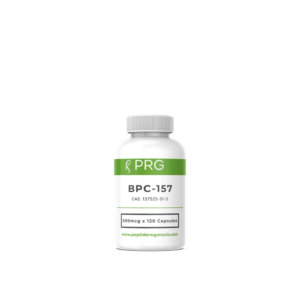
BPC-157 Capsules UK: Legal Status, Safety and What Buyers Should Know
Search interest in bpc-157 capsules uk has grown quickly, and so has the number of online listings. Many of those listings make claims that regulators do not allow. This guide explains what BPC-157 is, where it stands under UK rules, and how to protect yourself if you are researching it.
What Is BPC-157?
BPC-157 is a synthetic peptide of 15 amino acids, derived from a protein found in gastric juice. Almost all published research comes from laboratory and animal studies. There is no robust human clinical evidence showing that it is safe or effective, and it has not been approved as a medicine by the MHRA, the FDA, or the European Medicines Agency. Anything beyond that is marketing, not established science.
Is BPC-157 Legal in the UK?
The position is more restrictive than many sellers admit:
- Not a licensed medicine. It has no marketing authorisation for any human use.
- Medicinal claims. A product that claims to treat, repair, or improve a bodily condition can be classed as a medicine, and selling an unlicensed medicine is a regulatory breach.
- Food supplement rules. Ingredients without a history of significant UK or EU consumption before 1997 need novel food authorisation, which BPC-157 does not have.
- Sport. BPC-157 is on the World Anti-Doping Agency prohibited list, so competitive athletes risk bans.
Rules and enforcement change, so check current guidance from the MHRA and Food Standards Agency before making decisions.
BPC-157 Capsules in UK Listings: What You Will Find
Anyone searching for bpc-157 capsules in uk will see products described as “complex”, “blends”, or “nutritional support”. Be careful with these. The label does not tell you whether the active peptide is actually present, stable, or in the stated amount. Peptides are fragile molecules, and oral capsules raise a further question about how much survives digestion. Marketing language such as “body comfort” or “post-exercise support” does not change a product’s regulatory status.
BPC-157 Capsules Price: Why Costs Vary So Widely
If you are comparing bpc-157 capsules price listings, several factors explain the spread:
- Purity and testing: Third-party testing for identity and purity costs money. Unusually cheap products often skip it.
- Peptide content: Some products contain very little active ingredient, or none, despite the label.
- Pack size and fillers: Capsule count and added ingredients such as probiotics change unit cost.
- Supply chain: Imported stock may carry customs, storage, and quality-control risks.
- Seller risk: Sellers who ignore regulations can price lower because they carry none of the compliance costs.
A low price is not a bargain if you cannot verify what is in the product.
Buying BPC-157 Capsules Online: Risks to Weigh
People who look for bpc-157 capsules online are exposed to several risks. Products may be mislabelled, contaminated, or contain different compounds from those advertised. Marketplaces and social media shops are especially hard to verify. Your consumer protections may also be weaker for unlicensed products, and customs may seize imported parcels. If a seller makes treatment or recovery promises, treat that as a red flag, not reassurance.
BPC-157 Capsules for Sale: How to Spot Unsafe Sellers
When you see bpc-157 capsules for sale on a page, check for these warning signs:
- Claims about healing, injury repair, gut health, or pain relief.
- No batch-specific certificate of analysis from an independent laboratory.
- No company registration number, UK address, or working contact details.
- Reviews that look copied, and “before and after” claims.
- Dosing instructions, which should only come from a prescriber.
- Pressure tactics such as countdown timers and “last stock” banners.
Safety Concerns and Unknowns
Because no human safety trials exist, side effects, long-term risks, and drug interactions are unknown. This matters most if you are pregnant or breastfeeding, have or have had cancer, take prescription medicines, or have a condition affecting blood vessel growth. Some laboratory work has examined BPC-157’s effect on blood vessel formation, which is a reason for caution, not a proven risk or benefit. Speak to a GP or pharmacist before taking any unlicensed product.
Safer Alternatives to Discuss With a Professional
If your interest is injury recovery, joint comfort, or gut symptoms, these routes carry real evidence and oversight:
- GP or physiotherapist: For persistent injuries, assessment and graded rehabilitation.
- Pharmacist: For licensed pain relief and supplement interaction checks.
- Dietitian: For gut-health concerns.
- Sports medicine clinician: For athletes who need to stay within anti-doping rules.
Frequently Asked Questions
Is BPC-157 approved in the UK?
No. It has no marketing authorisation as a medicine.
Can I take BPC-157 as a supplement?
It is not an authorised food supplement ingredient, and products sold this way may breach UK rules.
Does BPC-157 work in humans?
Evidence is limited to early research. Claims of proven benefit are not supported.
Is BPC-157 banned in sport?
Yes. WADA lists it as prohibited.
How can I report an unsafe product?
Report suspected unlicensed medicines or side effects through the MHRA Yellow Card scheme, and concerns about food products to your local Trading Standards.
Conclusion
BPC-157 is an experimental peptide with limited human data and no UK approval. Capsules sold under supplement labels carry legal, quality, and safety uncertainty. Learn the regulatory position, be sceptical of strong claims, and talk to a healthcare professional before using any unlicensed product.
Reviews
There are no reviews yet.